
I'll admit it, I'm always looking down at the ground.
If you've ever walked somewhere with me, you've probably watched me stop mid-sentence, step off the sidewalk, and whip out my phone to snap a picture of a manhole cover. Tour guides in Paris, Buenos Aires, and Barcelona have waited on me. Friends have learned to keep walking. My kids, nephews and niece momentarily have regularly pretend not to know me.
This particular habit is Alex Benik's fault, or at least that's what I tell him! Alex is perfectly sociable in person, but it's his Instagram profile that keeps things interesting for us internet junkies: random pictures of physical digital infrastructure from around the world: utility access covers, generators, the odd aerial fiber run.
At some point I started sending him my finds to see if I'd discovered something new. Sort of a digital infrastructure Easter Egg hunt.
A few favorites
Search "manhole cover" in my Apple photos brings up some great memories.
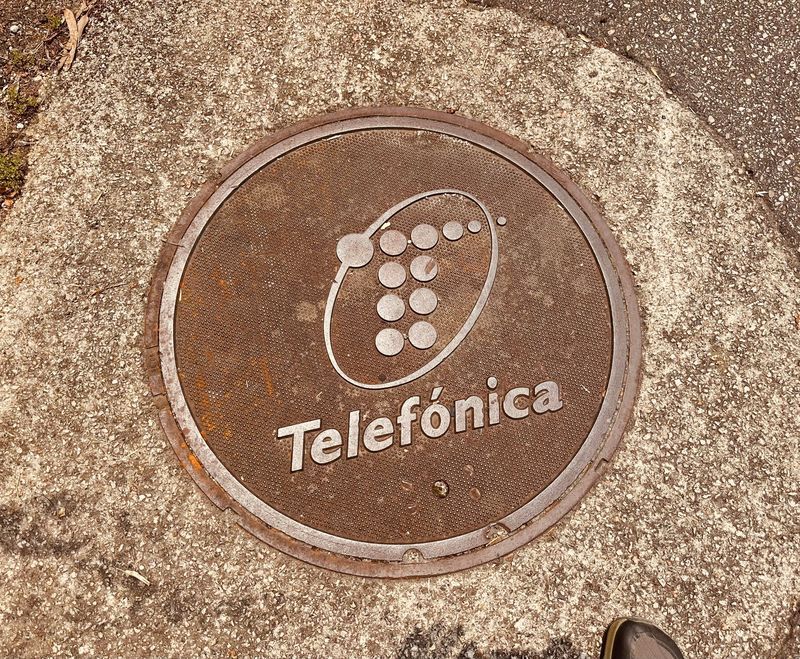
There are the many Telefonica and Vodafone covers I captured while walking the Camino de Santiago with my two boys, aged 13 and 15 at the time. Trust me, walking for 18 days through Portugal and Spain means you spend a lot of time looking down!
En route to a food tour in Lima with my dad and brother, I found a classic Global Crossing cover right outside our hotel. So cool! But within a few blocks I was stumbling on more providers than any city I'd ever been to: Impsat Peru, CenturyLink, Claro, FiberLux, Entel, Telmex, Level3, AT&T, and Telefónica.
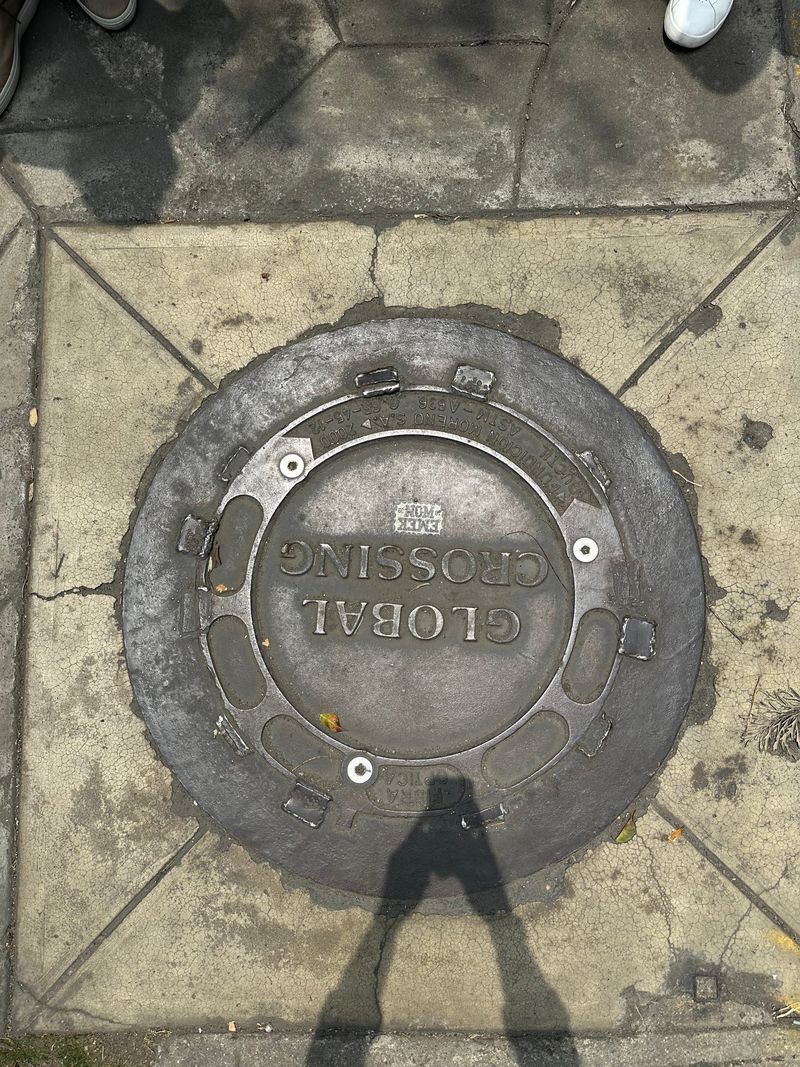
As it ends up, deregulation in the 1990's invited a flood of network builders into the country. Learning about the history from each build is something I enjoy.
The small names
Many of the names are big, but the best ones are small or forgetten.
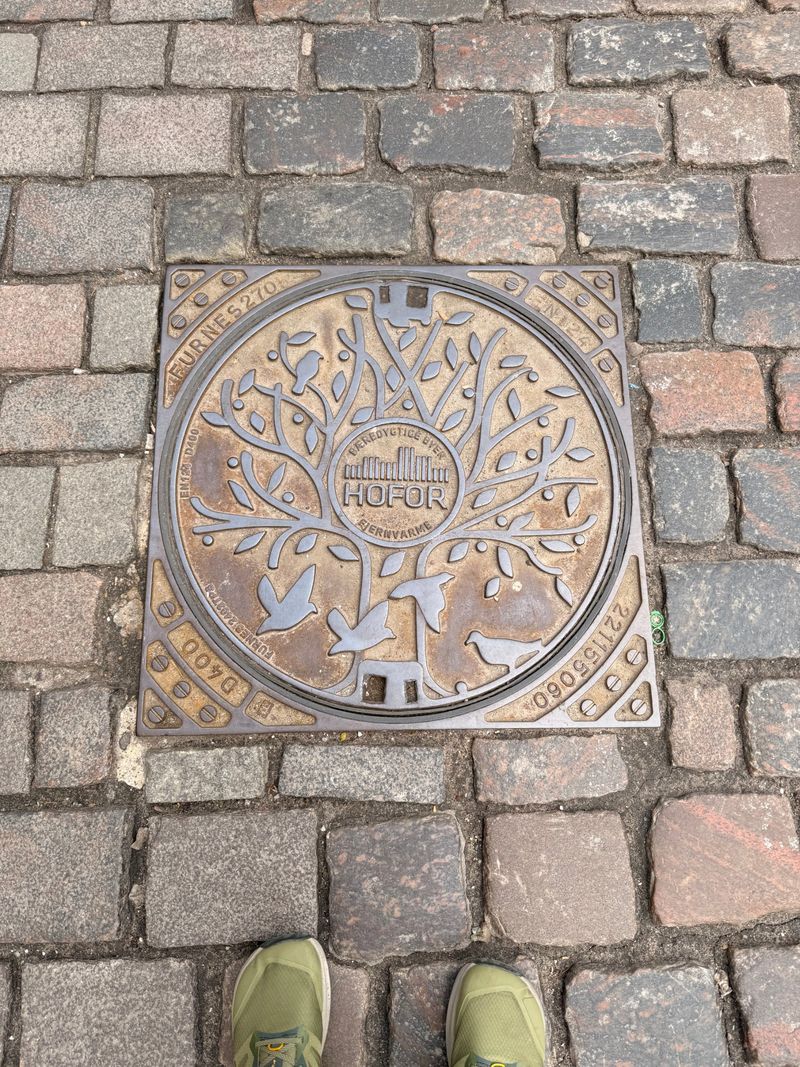
At the University of Vermont there's a cover that just says UVM TELEPHONE. DukeNet is a fun one in Charleston (formed in 1994 as the fiber arm of Duke Energy) and Monaco Telecom's plates are simple but unique. A Compañía de Teléfonos de Chile lid and various Copenhagen covers are more art than utility.
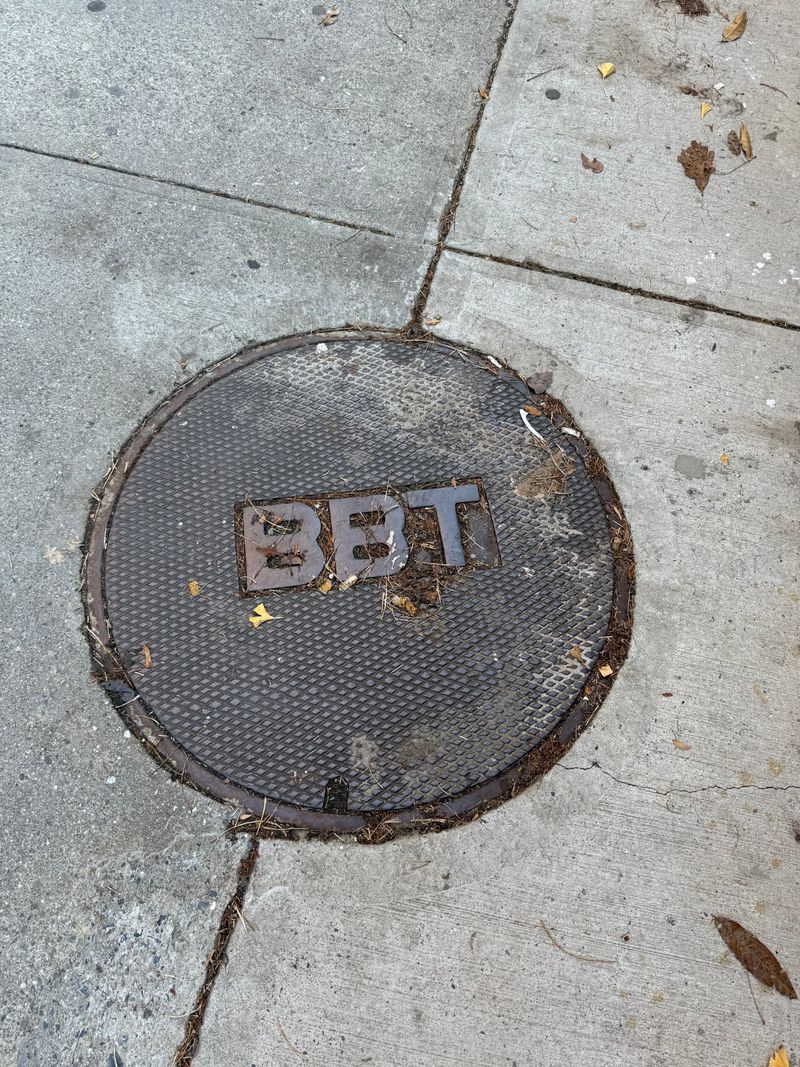
Closer to home, New York City is one the best telecom infrastructure cities in the world, going all the way back to the Western Union Building at 60 Hudson. It's no surprise that someone maintains a NYC-specific manhole cover website, but I'm happy just to see the BBT cover en route to my favorite coffee shop in Lower Manhattan (BBT stands for Brooklyn Battery Tunnel, now the Hugh L. Carey Tunnel).
Pro travel tip: find the telephone museum
Whenever you visit a new country, look for the telephone museum. They're cheap, usually quiet, and full of things you won't see anywhere else: old exchanges, wooden payphone booths, the national carrier's whole design history in one room.
The best part is the people running them. They're usually volunteers, always happy to see visitors, and most of them have stories you simply can't get from a placard.
And on the walk there, have a look down at the ground.

