Last Tuesday I was back in Boston to co-host our October Alt Cloud meetup. Jack O'Brien from subconscious.dev and Sebastian Bryers from Shopify were the stars of the show.
After the presentations, I grabbed a slice of pizza and wound my way around the room to chat with Sebastian. I wanted to thank him for a thoughtful presentation, but also to learn more about his story, which seemed just about as non-traditional as my own career path. Ends up, we have something in common: we both studied music in college!
Reflexive AI exposes a new challenge: collaboration
Shopify has been at the AI transformation game longer than most. It rolled out GitHub Copilot a year before ChatGPT existed, but things really took off when CEO Tobi Lütke shipped a memo that made reflexive AI use a baseline expectation for everyone at Shopify. Sebastian's talk described what that looks and feels like from the inside. TLDR: a lot of traditional toil (coordination, emails, project planning, engineering feedback) simply leaving his plate.
I asked him what challenges his team faced now that agents handle so much of the work. Unsurprisingly, it's the stuff that requires people to really think, communicate, align, and agree: what to build, what to cut, which tradeoffs to live with, who owns what.
In other words: collaboration.
At work we tend to confuse coordination with collaboration. I know I do. Sending emails (inbox zero has been my love language for two decades), scheduling a follow-up meeting, approving a pull request are all coordination tasks. Deep collaboration is very different, and it usually involves a group of people with different views coming together, often in real time, and with a certain focus or intensity.
Back to the rehearsal room for us!
Sebastian and I quickly steered the conversation to our shared musical training, which had been a defining experience earlier in our lives. We agreed that even knowing what it feels like to be truly “in sync” with a group of musicians (or singers in his case) provides an important baseline that feels relevant in this moment.
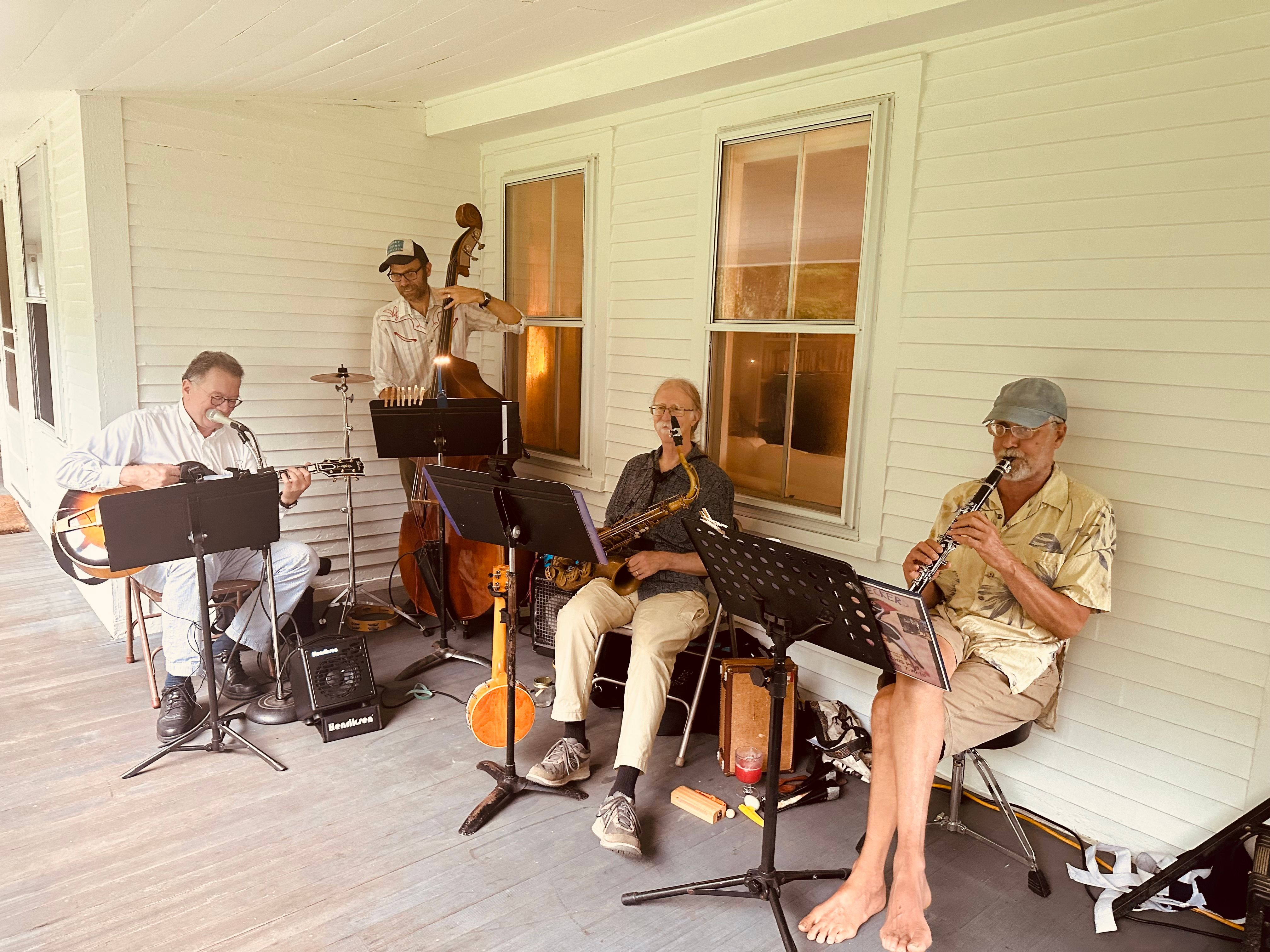
There are examples beyond music (sports comes to mind), but rehearsing and performing chamber music strikes me as an ideal way to hone high-level collaboration skills:
- Listening while you play. You can't play your part well without knowing the overall score and listening closely to each person in real time. You adjust pitch, tempo, and volume constantly in response to the people around you. Playing the notes isn't enough.
- Accountability. You have to learn your part (and the overall score) before rehearsal, and show up on time. Nobody can cover for you, everyone can hear it if you've slacked off, and it wastes everyone's time if you don't arrive focused and ready to work.
- Flexibility. If a colleague changes the tempo or a soloist breathes somewhere you didn't expect, you go with it, in real time. Your job isn't to be right, but to achieve the overall goal. No extra meeting required.
- Many voices, one vision. A good choir doesn't sound like 30 soloists, and a great string quartet blends into one cohesive unit. That usually means giving up some of your own sound for the whole. It also happens to be a lot of fun:
After a Mozart concerto reading with my friend Rose.
The big guys see it too
Anthropic recently published research on how work is changing inside their company. If you have 30 minutes, I recommend take the time to read it. Unsurprisingly, agents are doing substantial work across all functions.
By August 2026, agents run by individual employees at Anthropic worked six hours for every hour a human worked. Code commits per engineer were up 5x over six months, and lawyers, salespeople, and finance employees showed substantial productivity gains.
Just like at Shopify, the bottleneck at Anthropic has moved to people. One employee said hard problems increasingly “require some amount of human convening and decision-making and governance to solve.” Another said “the 20% that was strategic becomes 90% of the job.” Hiring managers reported emphasizing autonomy and judgment more heavily when filling a role, and domain expertise less.
What can we be thinking about
There is no easy answer to managing humans, but here are a few ideas I’m thinking about:
- Treat collaboration as a skill, not a personality trait. We've historically trained people on tools and processes, but rarely on working through a hard decision with five other people in a room. If we're going to be good at it, we'll need to practice.
- Hold rehearsals, not reviews. Async reviews tend to catch errors, but they don't easily build shared understanding. I can imagine that the highest-value time on an AI-first team is when people make something together in real time (while agents handle the prep, coding, note-taking, and follow-up).
- Practice outside of work. Chamber music, a community band, that weekend soccer match, maybe a dinner party where everyone cooks together. Find activities with a common goal, a fixed date, and an outcome everyone can see, hear, or feel. In a polarized world there aren't many places left where people with different views have to make one thing together. Find them, or make them.
- Hire for it. If collaboration is a scarce skill, it should probably show up in interviews and reward those who do it especially well.
I live in Marlboro, Vermont, home to a chamber music festival where the best musicians in the world spend weeks rehearsing a piece together, often with no promise of a performance at the end. Rehearsing is the point.
Can you imagine doing something like that at work? I sure can.